Overview
Mailbuttons provides frictionless access to AI agents directly via email, letting users trigger automations and receive structured outputs without new apps or logins. I designed the platform to emphasise reliability, low latency, and a security-first architecture.
Industry
AI productivity, automation
My Role
Architecture, backend engineering, deployment, operations
Brand Story
Email remains the world's most pervasive interface. I founded Mailbuttons on a simple idea: if teams could trigger powerful AI workflows from any inbox, adoption would be instant and universal. No new app. No complex rollouts. Just send an email and get results.
By combining Rust's reliability with pragmatic AI integrations, Mailbuttons turns everyday messages into high-trust, auditable automations that scale from a single contributor to global operations.
Why Rust
I chose Rust for its ownership model and zero-cost abstractions, which enable a backend that is both fast and safe. Memory safety without a garbage collector keeps tail latencies predictable — essential when email-based interactions must feel instant and dependable.
- Strong typing and exhaustive handling reduce edge-case failures in email parsing and routing.
- Asynchronous I/O supports high concurrency for outbound/inbound mail and agent calls.
- Security-first approach with minimal attack surface and explicit dependency control.
Architecture at a Glance
Core Services
HTTP and email orchestration services handle user requests, authenticate agent invocations, and normalise responses back to email.
Agent Execution
Stateless invocations to AI providers and Python-based microservices are queued and monitored for reliability and cost control.
Observability
Structured logs, metrics, and request tracing ensure fast incident response and transparent performance.
Security
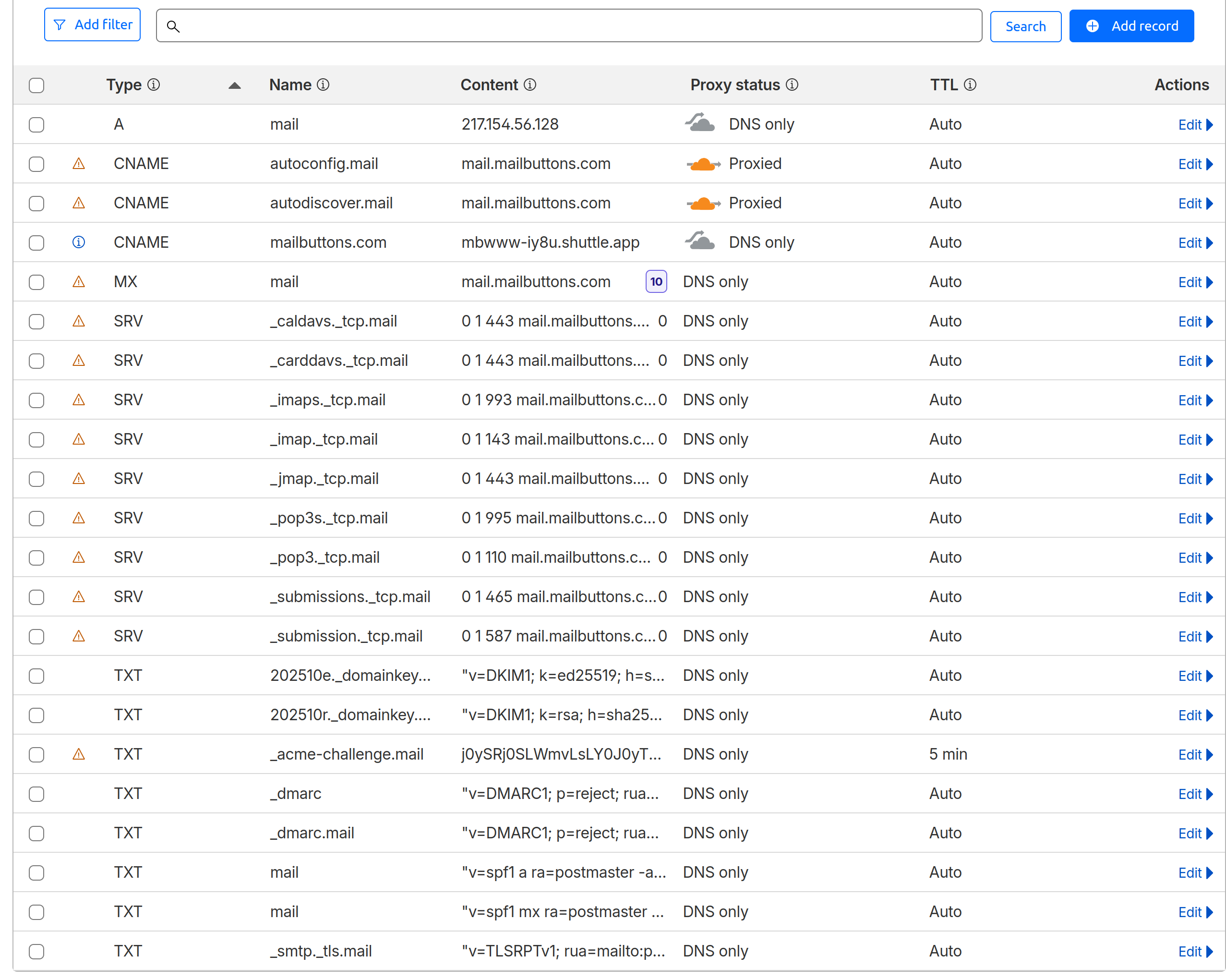
Strict secret management, principle of least privilege, and email hygiene (SPF/DKIM/DMARC) best practices.
Outcomes
Representative metrics for typical workloads; exact figures vary by agent and provider.
What's Next
Inbound Email with Stalwart
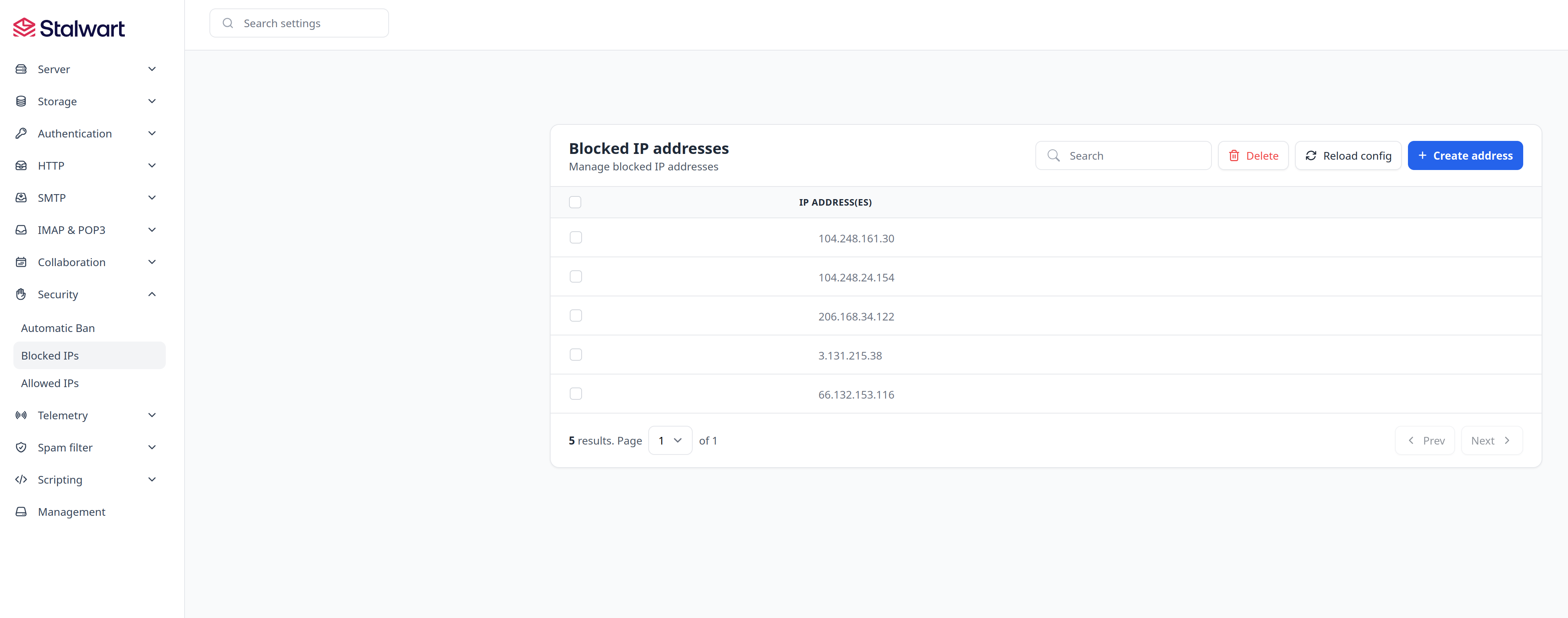
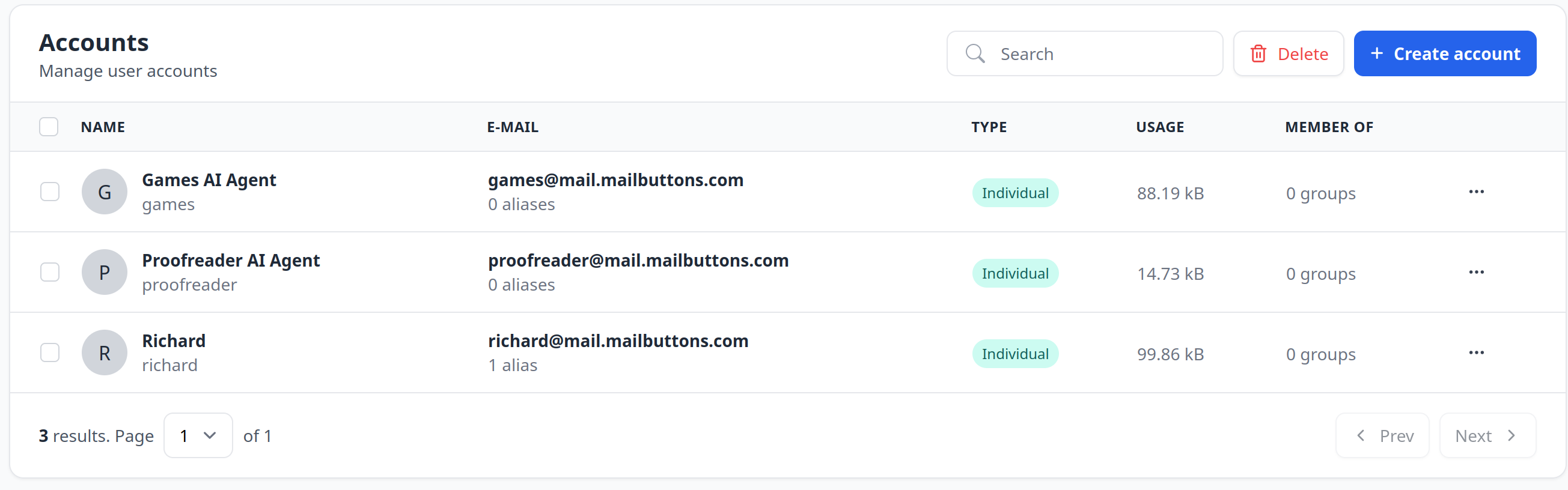
The roadmap includes receiving emails using Stalwart, a modern, Rust-based mail server. This enables fully closed-loop email workflows — processing incoming messages, invoking agents, and replying with structured results.
AI Agent Marketplace (Python)
A marketplace to host AI agents written in Python will expand capability coverage and accelerate integrations. Curated templates, usage metering, and sandboxing will help teams ship safely and quickly.
What Building Mailbuttons Taught Me About Advising on AI
Building Mailbuttons from scratch — architecture, implementation, deployment, operations — has fundamentally shaped how I advise PE firms and portfolio companies on AI strategy.
When I evaluate a company's AI roadmap during due diligence, I'm drawing on direct experience with the same challenges they face: prompt engineering that works in demos but fails in production, the real cost of LLM API calls at scale, the difference between a proof-of-concept and a system that handles edge cases reliably.
Most AI strategies I see in DD reports are aspirational. They list capabilities without addressing the engineering reality of building and maintaining AI systems. Having built one myself, I can assess whether a company's AI plans are grounded or speculative — and quantify what it will actually take to deliver them.
This is the difference between advisory that reads vendor pitch decks and advisory that reads code. Building Mailbuttons keeps me honest about what AI can and can't do today.
Screenshots
Interested in similar work?
I design and build Rust-based platforms with pragmatic AI workflows. Happy to discuss your project.
Get in touch